Anglais · voie professionnelle · pour l’enseignant

Les fêtes du monde anglophone : jalonner l’année

Axe du programme (lycée professionnel)

Programme de langues vivantes de la voie professionnelle, CAP et baccalauréat professionnel (arrêté du 3 avril 2019, BO spécial n° 5 du 11 avril 2019). La voie professionnelle n’a pas d’axes : la séquence relève des « Thèmes d’étude pour l’acquisition des repères culturels et savoirs lexicaux associés » : « jours fériés, fêtes nationales et locales » ; « traditions, us et coutumes, folklore, contes et légendes ».

Niveau CECRL

A2 vers B1. La séquence se situe au passage de A2 à B1 : l’élève comprend et utilise des expressions courantes sur des sujets familiers (A2), puis commence à raconter un événement, une fête ou une expérience et à donner brièvement son avis (B1).

Problématique

Is a celebration still the same when we share it online instead of living it together at home or in the street?

Objectifs linguistiques

  • Lexique des fêtes, de la nourriture, des décorations et des traditions (mots à retenir de chaque fiche).
  • Dates, mois et saisons ; prépositions de temps (in, on, at).
  • Présent simple pour décrire une coutume ; prétérit pour raconter l’origine d’une fête.
  • Impératif et consignes ; exprimer un goût ou un avis (I like, I think).

Ancrage culturel

Les grandes fêtes de l’Angleterre, de l’Écosse, du pays de Galles, de l’Irlande et des États-Unis, mois par mois : les Journées du patrimoine (Heritage Open Days), la fête des moissons (Harvest Festival), Halloween, la nuit des feux de joie (Bonfire Night), Thanksgiving, Noël, la soirée en l’honneur de Robert Burns (Burns Night), la Saint-Valentin, Mardi gras et sa course de crêpes (Pancake Day), la Saint-Patrick, Pâques et la fête de l’Indépendance (Independence Day).

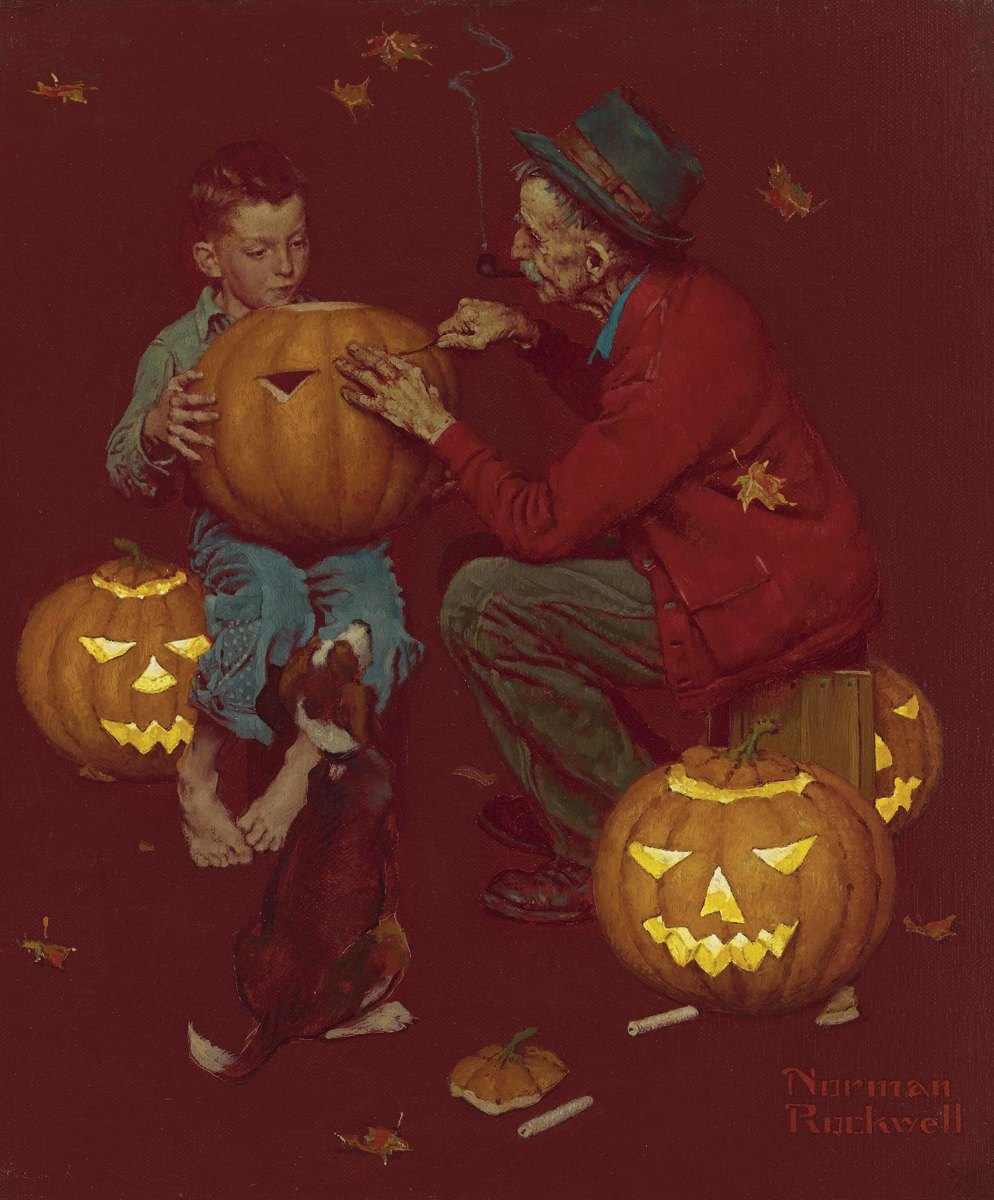
Painting by Norman Rockwell: an old man in a red jacket carves a pumpkin held by a barefoot boy, with a dog and glowing jack-o’-lanterns around them
Norman Rockwell, Old Man and Boy: Halloween, about 1952, oil on canvas, 38.1 × 33 cm, Brown & Bigelow Four Seasons calendar, 1952, private collection. © Brown & Bigelow. All rights reserved.

Je vous propose d’étudier les grandes fêtes du monde anglophone afin de jalonner l’année scolaire. Ces temps forts tombent souvent juste avant les vacances, à un moment où l’attention des élèves fléchit et où ils apprécient un changement de rythme.

Loin d’être des séances « récréatives » sans enjeu, ces fêtes ouvrent une vraie fenêtre culturelle sur l’Angleterre, l’Écosse, le pays de Galles, l’Irlande ou les États-Unis. Elles permettent de revoir du lexique et des points de grammaire dans un contexte vivant.

J’ai choisi des supports agréables, ludiques et colorés, utilisables en classe entière comme en petits groupes. Chaque fête débouche sur une activité créative : les élèves produisent quelque chose qu’ils peuvent montrer, afficher ou offrir.

Sur chaque fiche, le texte, la consigne et l’exercice sont entièrement en anglais, sans traduction côté élève. Pour onze fêtes, le volet « Activités pour la classe » propose des petites activités, un exercice exemple autocorrigé et une tâche finale. Chaque fiche s’imprime comme une fiche à trous, ou se partage sur l’ENT.

Repères de niveau (CECRL)

  • A1 → A2 : 3e prépa-métiers, début de CAP. Objectif de fin de CAP : A2.
  • A2 : CAP et 2de bac pro.
  • B1 : 1re et Terminale bac pro. Objectif de fin de bac pro : B1+, voire B2 pour certains élèves.

Chaque fête indique un niveau conseillé. Toutes les activités restent adaptables : on simplifie la consigne ou on ajoute une production plus longue, selon la classe et le rythme de travail de chacun.

Festivals and cultural events

All school year, month by month: the big festivals of the English-speaking world, explained in simple English, with a video to watch in class, a task and words to remember.

Autumn

September

Heritage Open Days

In September · England and Scotland

For a few days in September, castles, town halls, workshops and places that are usually closed open their doors, at no cost.

In Scotland, the same idea is called Doors Open Days.

Your turn: Name three places you can visit on Heritage Open Days: “a castle, a museum, a…”

Words to remembera castlea town halla museumat no cost

October

Halloween

October 31st · Ireland, United Kingdom, United States

Level A2 · CAP, 2de bac pro

Halloween comes from a very old Celtic festival in Ireland and Scotland, Samhain. It marked the start of winter.

In the past, people carved turnips; in America, pumpkins took their place. Children dress up and knock on doors: “Trick or treat!”

Your turn: Draw your costume and describe it: “I am a witch. My hat is black.”

Words to remembera pumpkina costumetrick or treata ghosta witch
Go to the 6e lesson → Dragons, saints and legends ↗
Class activities · exercise
A carved pumpkin with a scary face, glowing in the dark
Jack-o’-lantern · Toby Ord · CC BY-SA 2.5 · Wikimedia Commons

Moment conseillé : La dernière semaine avant les vacances de la Toussaint.

Petites activités

  • Affiche « Wanted » d’un monstre inventé : description physique, crimes, récompense (adjectifs, has got, prétérit).
  • Histoire d’horreur en six mots, puis lecture à voix basse, lumières éteintes.
  • Pour les filières cuisine : recette de pumpkin soup à l’impératif.

Exercise → The “Wanted” poster

Complete the poster with the words from the box. Use each word once.

Word boxsharphairygreensneakystolescaredhuge

WANTED: GRIBBLE, the monster of the school canteen
He is : he is three metres tall!
He has got three eyes, the colour of grass, and very teeth: they can cut a tin can.
His arms are long and , like a gorilla’s.
He is very : nobody sees him, nobody hears him.
Crimes: Last night, he all the sweets and he the teachers.
Reward: 100 pumpkins!

Tâche finale : la galerie des monstres

Chaque élève invente son monstre et réalise son affiche « Wanted ». Les affiches sont exposées dans la classe. Par deux, les élèves font le tour de la galerie, lisent les descriptions à voix haute et votent pour le Most Wanted Monster.

November

Diwali

In October or November (November 8th in 2026) · India, the UK and the world

Millions of Hindus, Sikhs and Jains celebrate Diwali. It marks the victory of light over darkness.

People light small lamps called diyas and draw colourful patterns in front of the house: rangolis. In Leicester, in England, the festival attracts huge crowds.

Your turn: Draw a rangoli pattern and colour it. Say the colours in English.

Words to remembera lamplightssweetsa festival

Bonfire Night

November 5th · United Kingdom

Level A2 → B1 · 2de bac pro

In 1605, Guy Fawkes and other plotters wanted to use gunpowder to blow up the Houses of Parliament in London, and King James I with them: this is the Gunpowder Plot.

The plot failed. Since then, every November 5th, people light big bonfires and fireworks. “Remember, remember the fifth of November!”

Your turn: Learn the first line of the poem and say it with your neighbour: “Remember, remember the fifth of November!”

Words to remembera bonfirefireworksa sparklerParliament
Go to the 6e lesson → Bonfire Night and Christmas ↗
Class activities · exercise
An old engraving of eight of the Gunpowder Plot conspirators, with their names above their heads
The 1605 plotters, an engraving by Crispijn van de Passe · Crispijn van de Passe the Elder · Public domain · Wikimedia Commons

Moment conseillé : À la rentrée des vacances de la Toussaint.

Petites activités

  • « Une » de journal de 1605 sur la Conspiration des poudres : titre, dessin, court article au prétérit.
  • Feu d’artifice de mots : chaque élève écrit, sur une étincelle en papier, un mot qui « explose » (onomatopées, verbes d’action).

Exercise → The front page of 1605

Put the verbs in brackets in the simple past.

LONDON, 5th November 1605
Last night, guards (find) a man in the cellars under Parliament. His name (be) Guy Fawkes. He (want) to blow up Parliament and kill King James I. Fortunately, the plot (fail) , and Londoners (light) bonfires to celebrate.

Tâche finale : le flash spécial de 1605

Par groupes, les élèves réalisent la une complète de leur journal, puis la présentent comme un flash d’information télévisé : un présentateur, un reporter « sur place », un témoin. La classe vote pour le meilleur titre.

Remembrance Day

November 11th · United Kingdom and Canada

On November 11th, 1918, the armistice ended the fighting of the First World War.

In the UK, people wear a red poppy and keep a two-minute silence at 11 o’clock. In Canada, people wear a poppy too.

Your turn: Make a paper poppy. Write a word about peace on it.

Words to remembera poppyto rememberpeacetwo minutes of silence

Thanksgiving

The fourth Thursday of November · United States

Level A2 · CAP, 2de bac pro

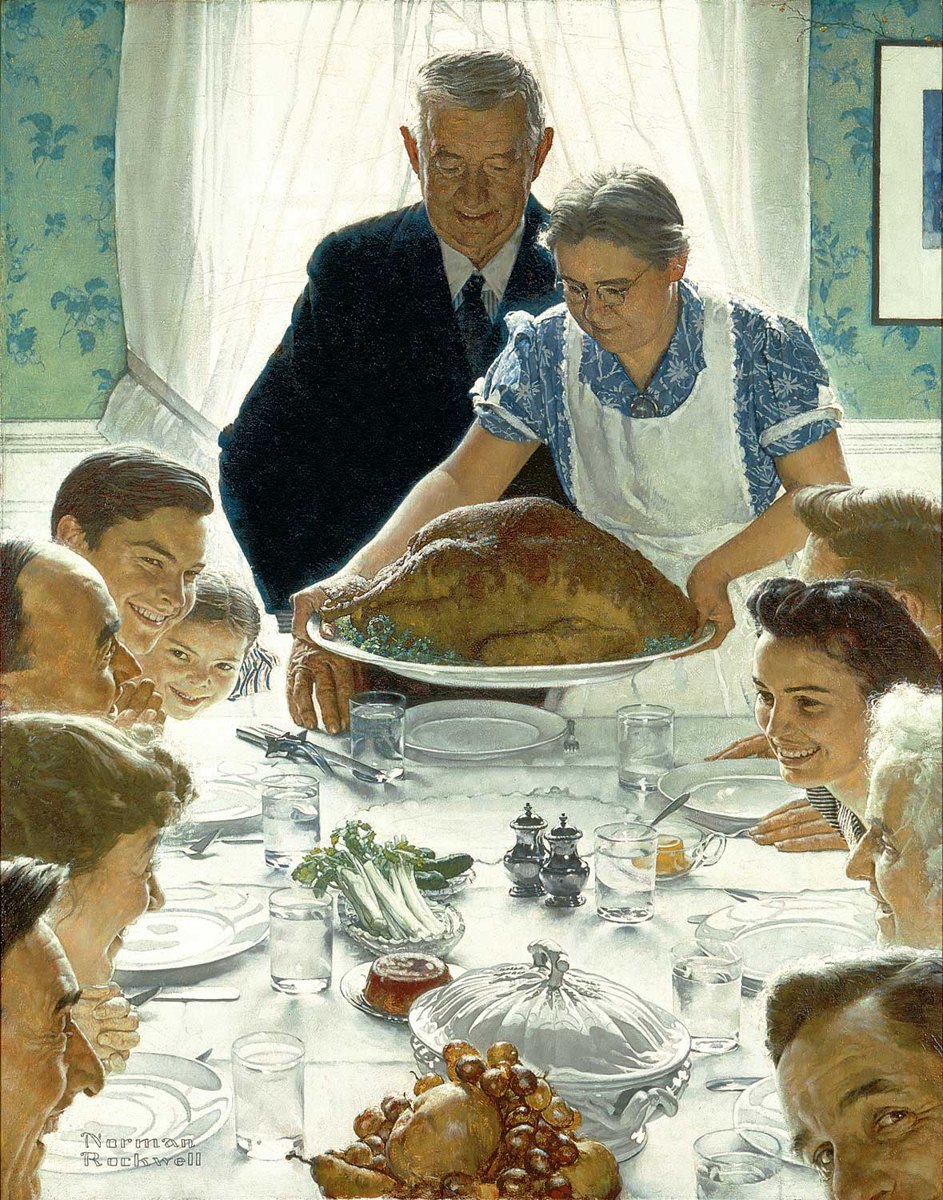
Painting by Norman Rockwell: a grandmother sets a huge roast turkey on the table in front of the whole smiling family
Norman Rockwell, Freedom from Want, 1943, oil on canvas, 116.2 × 90.2 cm, story illustration for The Saturday Evening Post, 6 March 1943, Norman Rockwell Museum Collections, Stockbridge, Massachusetts. © 1943 SEPS, licensed by Curtis Licensing, Indianapolis, IN. All rights reserved.

Americans remember the harvest meal of 1621 in Plymouth, shared by the Mayflower settlers and the Wampanoag people. In 1863, Lincoln made it a national holiday.

Families get together for turkey and pumpkin pie. In New York, a huge parade goes through the streets in the morning.

Your turn: Complete the sentence three times: “I am thankful for…”

Words to remembera turkeya pumpkin pieto be thankfula parade
Go to the 5e lesson → Thanksgiving and Juneteenth ↗
Class activities · exercise
A painting of settlers and Wampanoag people sharing a meal outdoors
The First Thanksgiving 1621, J. L. G. Ferris, about 1915 (painted much later: the clothes are not accurate) · Jean Leon Gerome Ferris · Public domain · Wikimedia Commons

Petites activités

  • Gratitude tree : chaque élève accroche une feuille « I’m thankful for… because… ».
  • Création d’un menu de fête illustré, avec les prix (commerce, vente, cuisine).

Exercise → The gratitude tree

Join the two parts with because: choose the right ending. Then write your own sentence.

Word boxhe always makes me laughI learn a lot about my future jobshe cooks delicious meals
  1. I’m thankful for my mum because .
  2. I’m thankful for my best friend because .
  3. I’m thankful for my work placement because .
  4. I’m thankful for because .

Tâche finale : l’arbre et le restaurant

Chaque élève écrit trois feuilles pour l’arbre de gratitude de la classe. En groupes, les élèves créent ensuite le menu illustré d’un restaurant de Thanksgiving, puis jouent la scène : serveur et clients passent commande en anglais.

Winter

December

Christmas

December 25th (and Boxing Day on the 26th) · UK and the English-speaking world

Level A2 → B1 · CAP, 2de bac pro

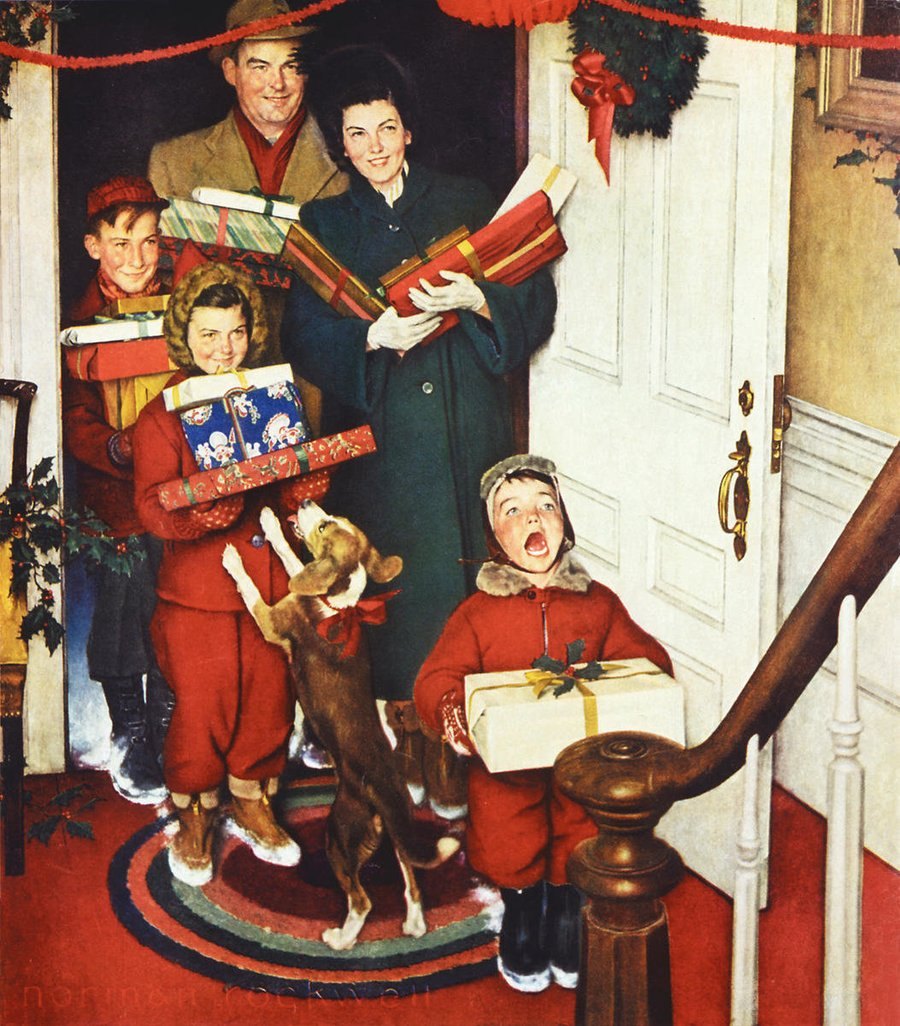
Painting by Norman Rockwell: a family arrives at Grandma’s door at Christmas, their arms full of wrapped presents
Norman Rockwell, Merry Christmas, Grandma… We Came in Our New Plymouth!, 1950, oil on canvas, Plymouth advertisement published in Life, 25 December 1950. Licensed by Norman Rockwell Licensing, Niles, IL. All rights reserved.

In the UK, people open an Advent calendar, hang up stockings and pull crackers at the table, with a little paper hat inside.

December 26th, Boxing Day, is a bank holiday. At 3 pm on the 25th, many families listen to the King’s Christmas message.

Your turn: Write a Christmas card in English for a friend: “Dear…, Merry Christmas!”

Words to remembera crackera stockingChristmas puddingBoxing Dayan Advent calendar
Go to the 6e lesson → Bonfire Night and Christmas ↗
Class activities · exercise
Two red, green and gold Christmas crackers
Christmas crackers · Cgros841 · Public domain · Wikimedia Commons

Moment conseillé : La dernière semaine avant les vacances de Noël.

Petites activités

  • Fabrication de Christmas crackers avec blagues et devinettes écrites par les élèves.
  • Concours de ugly Christmas jumper dessiné et présenté à l’oral.
  • Secret Santa descriptif : on devine le destinataire à partir d’un portrait en anglais.

Exercise → Cracker jokes

Match each riddle with its answer.

Word boxSandy ClawsSnowSnowflakesHe has a black belt
  1. What do snowmen eat for breakfast? →
  2. Why is Santa so good at karate? →
  3. What do you call a cat on the beach at Christmas? →
  4. What falls in winter but never gets hurt? →

Tâche finale : le grand tirage des crackers

Chaque élève fabrique un cracker en papier et y glisse une devinette de sa composition. Les crackers sont échangés et « tirés » à deux. Chacun lit sa devinette, la classe cherche la réponse. Pour finir, défilé des ugly jumpers dessinés.

January

Burns Night

January 25th · Scotland

Level B1 · 1re bac pro

Scottish people celebrate the birthday of their national poet, Robert Burns, born on January 25th, 1759.

On the menu: haggis, brought in to the sound of the bagpipes. People read his poems and sing “Auld Lang Syne”.

Your turn: Find Scotland on a map. Name two things from Burns Night: “haggis, bagpipes…”

Words to remembera poema poetbagpipeshaggis
Go to the 6e lesson → Welcome to the Scottish Highlands ↗
Class activities · exercise
A plate of haggis with mashed swede and mashed potatoes
Haggis, neeps and tatties · Colin · CC BY-SA 4.0 · Wikimedia Commons

Petites activités

  • Écriture d’un toast écossais pour honorer une personne ou un objet du quotidien (un outil d’atelier, par exemple).

Exercise → The toast

Read the model. Then write a toast to an object you use every day, and read it aloud.

Ideasstrongfaithfulreliablefastprecioususeful

Model: Here’s to you, my old hammer! You are strong and faithful. Every day, you help me build. Without you, my work would be impossible. Raise your glasses to the hammer!

Here’s to you, ! You are and . Every day, you help me . Without you, . Raise your glasses to !

Tâche finale : le Burns Supper de la classe

La classe organise un faux dîner écossais : on écoute un morceau de cornemuse, puis chaque élève se lève et prononce son toast à son objet. Les autres lèvent leur verre (imaginaire) et répondent en chœur avec le nom de l’objet.

February

Groundhog Day

February 2nd · United States

In Punxsutawney, a small town in Pennsylvania, people wait for a groundhog called Phil to come out of his hole.

The legend says: if Phil sees his shadow, there will be six more weeks of winter. If he does not see it, spring will come early.

Your turn: Make your prediction for February 2nd: “I think Phil will see / will not see his shadow, so…”

Words to remembera groundhoga shadowwinterspring

Lunar New Year

Between late January and mid-February (February 6th in 2027) · China, Asia, London and the world

Chinese New Year follows the calendar of the moon, so its date changes every year. 2027 will be the Year of the Goat.

Lion and dragon dances, red lanterns and red envelopes with money: in London, Chinatown has one of the biggest celebrations outside Asia.

Your turn: Find your Chinese zodiac animal and say: “I was born in the Year of the…”

Words to remembera lanterna dragon dancea red envelopegood luck

Valentine’s Day

February 14th · UK, United States and the world

Level A2 · CAP, 2de bac pro

The day is named after Saint Valentine, a Roman priest of the 3rd century. We don’t know much about his life.

In the UK, people often send a card without signing it: you must guess who wrote it. In the USA, children exchange small cards with the whole class.

Your turn: Write a kind message for a classmate: “You are… because…”

Words to remembera carda hearta complimentkind
Class activities · exercise
An old Valentine's card from 1909 with two little angels and a big red heart
A Valentine’s card, 1909 · Chordboard · Public domain · Wikimedia Commons

Moment conseillé : Souvent juste avant ou pendant les vacances d’hiver.

Petites activités

  • Cartes de compliments anonymes pour toute la classe (adjectifs de personnalité).
  • Poème acrostiche sur un prénom ou un métier.

Exercise → Compliment cards

Choose the right adjective.

  1. She always shares her snacks: she is .
  2. He never gives up: he is .
  3. She makes everybody laugh: she is .
  4. He listens to his friends’ problems: he is .

Tâche finale : le mur de la bienveillance

Chaque élève tire au sort deux camarades et leur écrit une carte de compliment : « You are… because… ». Les cartes sont décorées et affichées sur un grand cœur au mur. Variante : un acrostiche sur le métier préparé par la classe.

Pancake Day (Shrove Tuesday)

Shrove Tuesday, the day of Mardi Gras (February 9th in 2027) · United Kingdom

Level A2 · CAP, 2de bac pro

Before Lent, people used up their eggs, milk and butter: they made very thin pancakes, eaten with lemon and sugar.

In some towns, people run races with a frying pan, flipping their pancake as they go!

Your turn: Put the steps in order and say them in English: “mix, pour, flip, eat”.

Words to remembera pancaketo flipa frying pana race
Class activities · exercise
Women in aprons running down a street with frying pans
The Olney Pancake Race (England): tradition says it has been run since 1445 · Robin Myerscough · CC BY 2.0 · Wikimedia Commons

Moment conseillé : Mardi gras tombe souvent juste avant ou pendant les vacances d’hiver.

Petites activités

  • Course de pancakes dans la cour, puis compte rendu sportif au prétérit.
  • Fiche recette avec connecteurs : first, then, after that, finally.

Exercise → The recipe

Put the steps in order: choose First, Then, After that or Finally.

Word boxFirstThenAfter thatFinally
  • , flip the pancake.
  • , mix the flour, the eggs and the milk.
  • , add lemon and sugar, and enjoy!
  • , pour some batter into a hot pan.

Tâche finale : la course et l’émission de cuisine

Course de pancakes en relais dans la cour, poêle à la main. De retour en classe, chaque groupe tourne une vidéo d’une minute : une émission de cuisine où l’on explique la recette avec les connecteurs.

Spring

March

World Book Day

The first Thursday of March · United Kingdom and Ireland

On World Book Day, schools celebrate books and reading.

Many children go to school dressed as a character from a book.

Your turn: Choose a character from a book or a film. Write three sentences: “I am… I live in… I like…”

Words to remembera booka characterto dress upa story

St Patrick’s Day

March 17th · Ireland and the world

Level B1 · 1re, Terminale bac pro

Saint Patrick is the patron saint of Ireland. March 17th is a public holiday on the whole island.

Everything turns green: the parades in Dublin and New York, and even the river in Chicago, which is dyed green.

Your turn: Name five green things in English: “a shamrock, grass…”

Words to remembera shamrockgreena paradeIreland
Go to the 6e lesson → Dragons, saints and legends ↗Go to the 4e lesson → Irish traditions ↗
Class activities · exercise
A performer in a colourful costume and mask at the St Patrick's Day parade
St Patrick’s Day parade in Dublin, 2007 · William Murphy from Dublin, Ireland · CC BY-SA 2.0 · Wikimedia Commons

Petites activités

  • Chasse au trésor du leprechaun, avec des indices en anglais, dans l’établissement.
  • Écriture de limericks, petits poèmes humoristiques de cinq vers qui portent le nom d’une ville irlandaise, Limerick.

Exercise → The limerick

A limerick has five lines. Lines 1, 2 and 5 rhyme with each other; lines 3 and 4 rhyme with each other. Complete the poem with the words from the box.

Word boxrockseakneesock

There once was a lad from Tralee
Who wanted to swim in the .
He jumped off a
In his best Sunday ,
And came home with a crab on his !

Tralee is a town in the west of Ireland.

Tâche finale : le concours de limericks

Chaque élève écrit un limerick sur un personnage inventé de sa ville ou de son métier. Lecture publique, puis la classe vote pour le plus drôle. Le gagnant reçoit l’« or du leprechaun » (des pièces en chocolat), caché au bout d’une chasse au trésor en anglais.

April

April Fools’ Day

April 1st · UK and the English-speaking world

Level B1 → B1+ · Terminale bac pro

On this day, people play jokes and tricks. In the UK, tradition says the jokes stop at midday.

The media join in too: in 1957, a BBC programme showed a Swiss family picking spaghetti… from trees!

Your turn: Invent a funny fake headline for April 1st: “Scientists discover…”

Words to remembera jokea pranka hoaxto believe
Class activities · exercise

Moment conseillé : Juste avant les vacances de printemps.

Petites activités

  • Création d’une fausse information crédible, puis débat : comment la repérer ? (esprit critique, éducation aux médias).

Exercise → Fake news detectives

Is it true or is it an April fool? Use the detective questions, then choose.

In 1957, a famous British TV programme, Panorama, showed a Swiss family picking spaghetti from trees. Many viewers believed it!

Detective questions: Who wrote it? When was it published? Can I find it on other serious websites? Is it too funny or too shocking to be true?

  1. Spaghetti grows on trees in Switzerland.
  2. In the UK, April Fools’ jokes traditionally stop at midday.
  3. In Scotland, April 1st was traditionally called “Hunt the Gowk Day”.
  4. Penguins can fly to South America for the winter.

Tâche finale : les détectives de l’info

Chaque groupe prépare trois titres d’actualité : deux vrais, un faux. Les autres groupes mènent l’enquête avec les questions du détective et doivent trouver trois indices qui trahissent le canular. Un point par faux démasqué.

Easter

A Sunday in March or April (March 28th in 2027) · UK and the English-speaking world

Level A1 → A2 · 3e prépa-métiers, CAP

Easter is a big Christian festival. In the UK, Good Friday and Easter Monday are bank holidays.

Children look for chocolate eggs hidden in the garden: this is the Easter egg hunt.

Your turn: Hide a paper egg in the classroom. Give clues in English: “It’s under… It’s next to…”

Words to rememberan Easter eggan egg hunta bunnyspring
Class activities · exercise
Colourful painted Easter eggs in a circle on the grass
Easter eggs on the grass · Gytha69 · CC BY 2.0 · Wikimedia Commons

Moment conseillé : Juste avant les vacances de printemps.

Petites activités

  • Chasse aux œufs avec des énigmes, prépositions de lieu à l’appui.

Exercise → The egg hunt

Complete the clues with in, on, under, behind, between. Use each word once.

Word boxinonunderbehindbetween
  1. The first egg is the teacher’s desk, next to the computer screen.
  2. The second egg is the door: close the door to find it!
  3. The third egg is the bin: look inside!
  4. The fourth egg is the window and the board.
  5. The last egg is your chair: look down, on the floor!

Tâche finale : l’Egg Hunt de la classe

Chaque binôme cache un œuf (en chocolat ou en carton) dans la salle et rédige une suite de trois indices. Les binômes échangent leurs indices et partent à la chasse. Le premier binôme qui retrouve l’œuf gagne.

St George’s Day

April 23rd · England

Saint George is the patron saint of England; legend says he defeated a dragon. His flag is a red cross on a white background.

On April 23rd, people also celebrate Shakespeare: he was born around this date and died on April 23rd, 1616.

Your turn: Tell the legend in three sentences: “There was a dragon… George…”

Words to remembera knighta dragona legendEngland
Go to the 6e lesson → Dragons, saints and legends ↗

Summer

June

Make Music Day

June 21st · UK, United States and the world

On June 21st, the longest day of the year, everyone can play music in the street, and anyone can listen.

In the UK and in the United States, it is called Make Music Day.

Your turn: Say which instrument you play or would like to play: “I play… / I would like to play…”

Words to remembermusican instrumenta bandin the street

July

Canada Day

July 1st · Canada

On July 1st, 1867, three British colonies joined together to create Canada: this is Confederation.

People wear red and white, wave the maple leaf flag and watch fireworks. Until 1982, the holiday was called Dominion Day.

Your turn: Describe the Canadian flag in English: “It is red and white. In the middle, there is a…”

Words to remembera maple leafa flagConfederationfireworks

Independence Day (the Fourth of July)

July 4th · United States

Level B1 · 1re, Terminale bac pro

On July 4th, 1776, the Congress of the American colonies adopted the Declaration of Independence to separate from Great Britain.

Barbecues, parades and fireworks all over the country.

Your turn: Count the stars and the stripes on the American flag. Write: “There are … stars and … stripes.”

Words to rememberindependencefireworksa barbecuethe Stars and Stripes
Go to the 3e lesson → Lewis and Clark ↗
Class activities · exercise
A painting of the members of Congress in a big room, receiving the Declaration of Independence
Declaration of Independence, John Trumbull, 1819: the text is presented to Congress on June 28th, 1776 · John Trumbull · Public domain · Wikimedia Commons

Moment conseillé : À préparer pendant les dernières semaines de cours.

Petites activités

  • Rédaction collective d’une « Déclaration de la classe » : droits et valeurs du groupe, puis drapeau dessiné.

Exercise → The class Declaration

Complete the Declaration with must, should and can. Use each word once.

Word boxmustshouldcan

We, the students of , believe that:

  • Every student express his or her ideas: it is a right.
  • We respect each other: it is our most important rule.
  • It is a good idea: we help classmates who need help.

Tâche finale : la signature de la Déclaration

La classe met en commun ses droits et ses promesses dans une grande Déclaration, recopiée sur une affiche. Chaque élève vient la signer solennellement, comme les délégués de 1776. On dévoile ensuite le drapeau de la classe, dessiné par groupes.

In class

I watch the video once without writing anything. I watch it a second time and I write down three words I recognise. Then I tell my neighbour, in one sentence, what people do on that day. Last, I do the “Your turn” task. Everyone works at their own pace: a different pace is normal.

In “Class activities”, I choose or write my answers, then I tap “Check”. Green is right; red means I can try again.

Need help? Look at the words to remember, or ask your teacher: “How do you say… in English?” The videos open on YouTube. The coloured buttons lead to a complete lesson on the Séquences GEREX website.

For teachers: marking grid for written work (out of 20, bac pro)

Use this grid for every piece of written work in the sequence. The mark stays between 0 and 20: never below 0, never above 20.

Base: 10 points if the task is met.

Bonuses (up to plus 10)Points
Clear plan, followed+2
Introduction+1
Conclusion+1
Linking words+1
Figures of speech+1
Integrated quotations+2
General knowledge+2
Points taken off (up to minus 11)Points
Grammar: more than 5 errorsminus 3
Vocabulary: more than 5 errorsminus 5
Phrasing or reasoning: more than 3 errorsminus 3

Worked example: task met (10); plan, introduction and quotations (plus 5); grammar (minus 3). Total: 12 / 20.